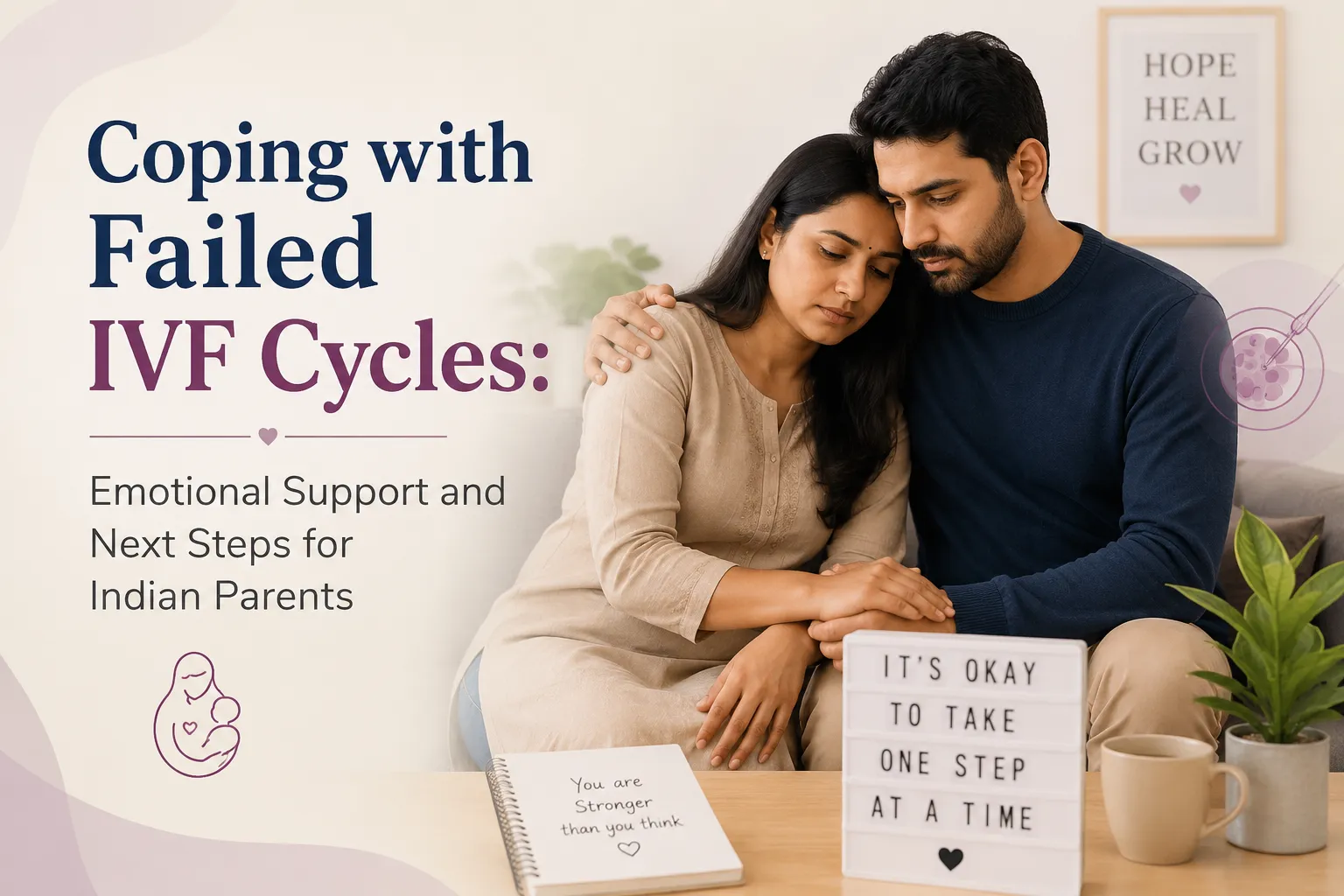
Coping with Failed IVF Cycles can be an incredibly challenging experience for Indian parents, bringing immense emotional distress and uncertainty. The immediate next steps involve acknowledging grief, seeking professional emotional support, and engaging in a thorough medical review with your fertility specialist to understand the reasons for failure and explore suitable future treatment options or alternative paths. This comprehensive guide aims to provide solace, practical advice, and clear direction for couples navigating this difficult phase in India.
Key Takeaway
- Failed IVF cycles are emotionally taxing; seeking professional counseling and peer support is crucial for mental well-being.
- A thorough medical re-evaluation after an unsuccessful cycle is essential to understand potential causes and plan future strategies.
- Various next steps are available, including repeat IVF cycles with protocol adjustments, alternative fertility treatments, or exploring options like adoption, tailored to individual circumstances and medical advice.
Navigating the Emotional Aftermath of Failed IVF Cycles for Indian Parents
For many Indian parents, the journey through In Vitro Fertilization (IVF) is a beacon of hope, often undertaken after years of trying to conceive. When an IVF cycle fails, the emotional impact can be profound, often described as a unique form of grief. Couples experience a roller coaster of emotions, including shock, sadness, anger, guilt, and a deep sense of loss for the dream that was so close. In a society where family and progeny hold immense cultural significance, the pressure can be compounded, leading to isolation and misunderstanding from well-meaning but uninformed relatives. It’s critical to remember that these feelings are valid and a natural part of the coping process. Giving yourselves permission to grieve and process these emotions, without judgment, is the first vital step towards healing and moving forward. Support systems, both personal and professional, play a pivotal role during this sensitive time.
Understanding the Reasons Behind Unsuccessful IVF Attempts
An unsuccessful IVF cycle is not a reflection of a couple's worth or effort but often stems from complex biological factors. Understanding why IVF fails can help in coping with failed IVF cycles and planning future strategies. While frustrating, it's crucial to acknowledge that IVF is not 100% successful and failure can occur for various reasons. These can range from issues with egg or sperm quality, embryo development, uterine receptivity, to underlying genetic or immunological factors. Identifying these reasons requires a thorough review with your fertility specialist to inform decisions about subsequent steps. This detailed analysis helps in designing a more tailored approach for any future fertility treatments.
Medical Reasons for IVF Failure
Several medical factors can contribute to an IVF cycle not resulting in a successful pregnancy. These include poor ovarian response, where the ovaries do not produce enough eggs or the eggs retrieved are of low quality. Embryo-related issues, such as chromosomal abnormalities, are a common cause of implantation failure or early miscarriage. Uterine factors like polyps, fibroids, or a thin endometrial lining can also prevent successful implantation. Additionally, certain male factor infertility issues, although addressed during IVF, might still impact embryo quality. Immunological problems, where the body's immune system rejects the embryo, are also sometimes implicated. For a deeper understanding of these complexities, exploring resources like Why IVF Fails the First Time? Reasons & What to Do Next can be beneficial.
Reviewing Your Journey: Medical Assessment After a Failed IVF Cycle
After the initial emotional impact, the next critical step is to schedule a comprehensive follow-up consultation with your fertility specialist. This appointment is crucial for a detailed medical assessment. Your doctor will review every aspect of the previous IVF cycle, from ovarian stimulation and egg retrieval to embryo transfer and post-transfer monitoring. They will examine laboratory results, embryo quality reports, and any specific protocols followed. This evaluation aims to identify potential contributing factors to the failure, which could range from hormonal imbalances, uterine issues, or embryo quality concerns. This analytical approach helps in coping with failed IVF cycles by providing clarity and a strategic pathway forward, rather than succumbing to despair. The goal is to learn from the past cycle and inform future decisions, whether that involves another IVF attempt or exploring alternative fertility solutions. For a complete understanding of the entire process, consider reading about the IVF Process in India.
| Factor | Details | India Average |
|---|---|---|
| Post-Cycle Consultation | Mandatory review with fertility specialist to analyze cycle details and laboratory reports. | Included in package / Rs 1,000 - 3,000 (separate) |
| Diagnostic Tests | May include additional blood tests, hysteroscopy, genetic screening (PGT-A). | Rs 5,000 - 50,000+ (depending on tests) |
| Counseling Support | Psychological support to address emotional well-being and stress. | Rs 800 - 2,500 per session |
| Treatment Plan Adjustment | Discussion on modifying medication, embryo selection, or transfer techniques. | No direct cost, part of consultation |
Who Should Consider Further Fertility Paths After an Unsuccessful IVF?
Deciding on the next steps after an unsuccessful IVF cycle is a deeply personal and often overwhelming decision. However, many individuals and couples are excellent candidates for exploring further fertility paths. This includes those who experienced a failed first cycle but have identifiable factors that can be adjusted in subsequent attempts, such as improving ovarian stimulation protocols, trying different embryo transfer techniques, or opting for ICSI Treatment. It also encompasses those with a strong desire for biological parenthood who are willing to investigate advanced diagnostic tools like preimplantation genetic testing (PGT) or consider donor gametes. Furthermore, couples who have exhausted multiple IVF attempts might explore alternative avenues like adoption, surrogacy, or other family-building options. The key is to have a candid discussion with your fertility specialist to assess your specific situation, review your options, and align on a path that is medically sound and emotionally fulfilling.
Couples with Repeat IVF Failures
For couples who have faced multiple unsuccessful IVF cycles, the emotional and financial toll can be immense. However, repeat failures don't necessarily mean the end of the journey. In such cases, a more in-depth investigation is usually warranted. This might involve advanced diagnostic tests like endometrial receptivity analysis (ERA), hysteroscopy to check for uterine abnormalities, or comprehensive immunological testing. Your specialist might also recommend a change in ovarian stimulation protocols, different embryo selection criteria, or even considering donor eggs or sperm. The objective is to pinpoint subtle issues that might have been overlooked and tailor a highly individualized treatment plan to improve the chances of success in subsequent attempts, making coping with failed IVF cycles more manageable.
Individuals Seeking Alternative Paths
After one or more failed IVF cycles, some individuals or couples may decide to explore alternative paths to parenthood. This decision often comes after careful consideration of emotional capacity, financial implications, and personal values. Alternative options can include using Donor Egg IVF in India or donor sperm if gamete quality is identified as a primary issue. Surrogacy, particularly in India with its clear legal framework for domestic couples, is another viable option for those with uterine factor infertility or recurrent implantation failure. For others, adoption, either domestic or international, offers a beautiful way to build a family. These alternative routes represent valid and fulfilling ways to achieve the dream of parenthood, providing different avenues when conventional IVF proves challenging.
What to Expect Next: Subsequent IVF Success and Alternative Treatments
It's important to understand that a single failed IVF cycle does not mean the end of the road. Many couples achieve pregnancy on subsequent attempts, especially with protocol adjustments informed by the previous cycle's performance. The cumulative success rate of multiple IVF cycles is often higher than that of a single cycle. According to the Indian Council of Medical Research (ICMR) guidelines, the live birth rate per embryo transfer in India generally ranges from 30-35% for women under 35, decreasing with age. For women experiencing failed IVF cycles, a re-evaluation might lead to strategies like Preimplantation Genetic Testing (PGT) to screen embryos for chromosomal abnormalities, or considering advanced techniques like assisted hatching. Exploring alternative treatments such as IUI with medication (if appropriate), or embracing options like donor gametes or surrogacy, also offers renewed hope and different pathways to parenthood. Don't hesitate to discuss all possible scenarios with your fertility expert.
“A failed IVF cycle is not a failure of the patient, but an opportunity for us, as specialists, to gather more data and refine our approach. Every cycle teaches us something valuable, guiding us towards a more effective strategy for the next attempt.” — Dr. Priya Sharma, Senior Fertility Specialist, SheIVF
Navigating Your Path Forward: A Step-by-Step Guide
Coping with failed IVF cycles involves a structured approach to both emotional healing and medical planning. This step-by-step guide helps Indian parents navigate the post-failure phase with clarity and purpose, ensuring they receive comprehensive support and make informed decisions for their family-building journey. This journey is unique for everyone, but a systematic approach can help alleviate some of the stress and uncertainty associated with an unsuccessful attempt.
- Step 1: Emotional Debrief and Support: Allow yourself time to grieve and seek emotional support through counseling, support groups, or trusted friends and family. Acknowledging and processing your feelings is paramount.
- Step 2: Comprehensive Medical Review: Schedule a detailed follow-up with your fertility specialist. Review all aspects of the previous cycle to identify potential causes of failure and discuss diagnostic tests for further investigation.
- Step 3: Develop a Revised Treatment Plan: Based on the medical review, work with your doctor to create an adjusted strategy. This might involve modifying IVF protocols, considering advanced genetic testing, or exploring alternative treatments like donor eggs, sperm, or surrogacy.
- Step 4: Self-Care and Lifestyle Adjustments: Focus on overall well-being. Implement stress-reduction techniques, maintain a healthy Indian Fertility Diet, and ensure adequate rest. Prepare your body and mind for the next phase, whatever it may be.
Financial Considerations: Cost of Next Steps After IVF Failure in India
The financial implications of repeat IVF cycles or alternative treatments in India are a significant concern for many couples. The cost of a single IVF cycle in India typically ranges from Rs 1,00,000 to Rs 2,50,000, depending on the city (e.g., Mumbai, Delhi, Bangalore) and the clinic. After an unsuccessful cycle, if a repeat IVF is chosen, the costs for medications, procedures, and potential advanced diagnostic tests (like PGT-A, which can add Rs 50,000-1,00,000) will recur. For those exploring donor egg IVF, the cost can range from Rs 2,50,000 to Rs 4,00,000, including donor compensation. Surrogacy, a more comprehensive option, typically ranges from Rs 10,00,000 to Rs 18,00,000. These figures are averages and can vary. It’s crucial to have transparent discussions with your clinic about comprehensive package costs, potential hidden charges, and financing options. While a daunting aspect, understanding the financial landscape is part of coping with failed IVF cycles and making informed future decisions. More detailed information on costs can be found on our IVF Cost India page.
Conclusion
Coping with Failed IVF Cycles is undoubtedly one of the hardest parts of the fertility journey, but it is not the end of hope. For Indian parents, navigating this path requires immense courage, resilience, and a robust support system. By allowing time for emotional healing, engaging in thorough medical review, and exploring all available next steps—whether it's an adjusted IVF protocol, alternative treatments, or different family-building avenues—you can find a path that aligns with your dreams. Remember, you are not alone in this journey, and there are always options. Book a free consultation with a verified fertility specialist on SheIVF — confidential and completely free.